What I've done lyrics"
In this farewell
There's no blood
There's no alibi
Coz I've drawn regret
From the truth
Of thousand lies
So let mercy come
And wash away
[chorus]
What I've done
I face myself
To cross-out what I've become
Erase myself
And let go of what I've done
Put to rest
What you've thought of me
Well I clean this slate
With the hands of uncertainty
[ What I've Done lyrics found on http://www.completealbumlyrics.com ]
So let mercy come
And wash away
[chorus]
What I've done
I face myself
To cross-out what I've become
Erase myself
And let go of what I've done
For what I've done
I start again
And whatever pain may come
Today this ends
Im forgiving what I've done
I face myself
To cross-out what I've become
Erase myself
And let go of what I've done
What I've done
What I've done
Forgiving what I've done
Friday, December 14, 2007

Music:Top 20
[01] Fergie - Big Girls Dont Cry
[02] Rihanna Feat. Jay-z - Umbrella
[03] Timbaland Feat. Keri Hilson - The Way I Are
[04] Kanye West Feat. Daft Punk - Stronger
[05] Sean Kingston - Beautiful Girls
[06] Plain White Ts - Hey There Delilah
[07] Avril Lavigne - When Youre Gone
[08] Maroon 5 - Makes Me Wonder
[09] Justin Timberlake - Lovestoned
[10] Enrique Iglesias - Do You Know? (ping-pong Song) / Dimelo
[11] Gwen Stefani - 4 In The Morning
[12] Rihanna - Shut Up And Drive
[13] Nelly Furtado - Say It Right
[14] Linkin Park - What Ive Done
[15] Mika - Relax (take It Easy)
[16] Soulja Boy - Crank That (soulja Boy)
[17] Timbaland Feat. Nelly Furtado & Justin T. - Give It To Me
[18] T-pain Feat. Akon - Bartender
[19] Amy Winehouse - Rehab
[20] Michael Bublé - Everything
Extra: Gear Images
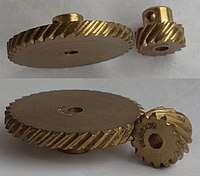
Helical Gears:
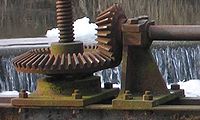
Bevel Gears

Crown Gears

Crank Gear

Worm Gears
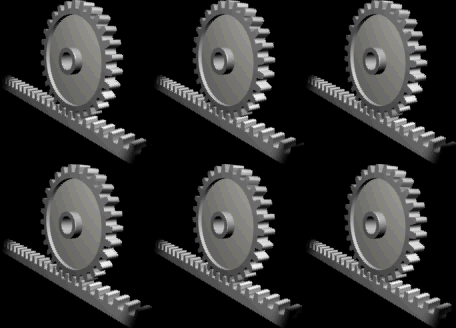
Rack and Pinion gears

Fifth input gear

9 flat gear

Dual idler gear drives
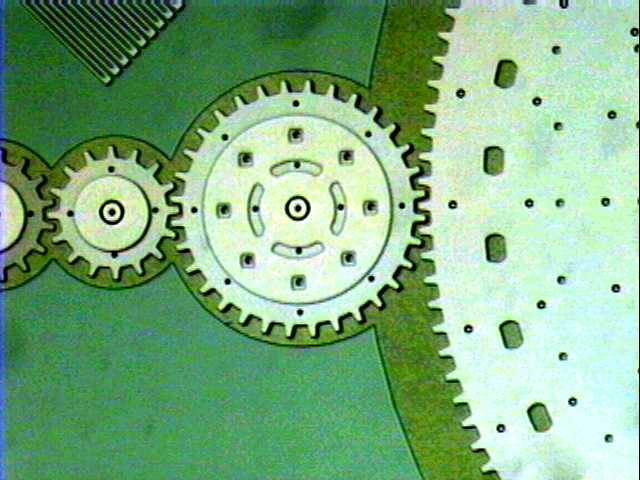
A gear with radius of 80microm
Gear terminology:
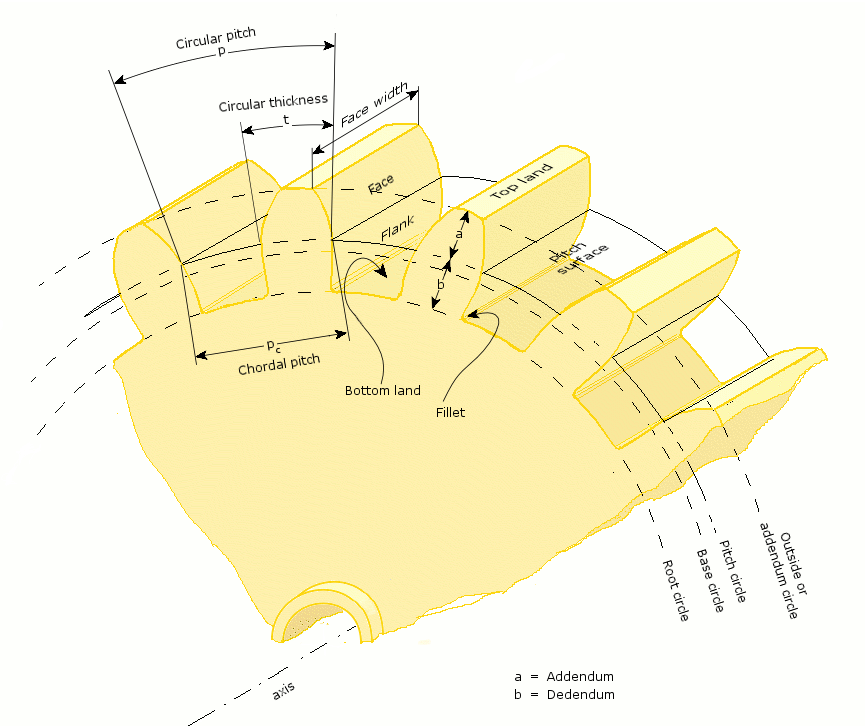
* Common abbreviations
o n. Rotational velocity. (Measured, for example, in r.p.m.)
o ω Angular velocity. (Radians per unit time.) (1 r.p.m. = π/30 radians per second.)
o N. Number of teeth.
* Path of contact. The path followed by the point of contact between two meshing gear teeth.
* Line of action, also called 'Pressure line'. The line along which the force between two meshing gear teeth is directed. It has the same direction as the force vector. In general, the line of action changes from moment to moment during the period of engagement of a pair of teeth. For involute gears, however, the tooth-to-tooth force is always directed along the same line -- that is, the line of action is constant. this implies that for involute gears the path of contact is also a straight line, coincident with the line of action -- as is indeed the case. Further note on tooth force56
* Axis. The axis of revolution of the gear; center line of the shaft.
* Pitch point (p). The point where the line of action crosses a line joining the two gear axes.
* Pitch circle. A circle, centered on and perpendicular to the axis, and passing through the pitch point. Sometimes also called the 'pitch line', although it is a circle.
* Pitch diameter (D). Diameter of a pitch circle. Equal to twice the perpendicular distance from the axis to the pitch point. The nominal gear size is usually the pitch diameter.
* Operating pitch diameters. The pitch diameters determined from the number of teeth and the center distance at which gears operate.2 Example for pinion: d_w = \frac{2a}{u+1} = \frac{2a}{\frac{z_2}{z_1}+1}
* Pitch surface. For cylindrical gears, this is the cylinder formed by projecting a pitch circle in the axial direction. More generally, it is the surface formed by the sum of all the pitch circles as one moves along the axis. Eg., for bevel gears it is a cone.
* Angle of action. Angle with vertex at the gear center, one leg on the point where mating teeth first make contact, the other leg on the point where they disengage.
* Arc of action. The segment of a pitch circle subtended by the angle of action.
* Pressure angle (ø). The complement of the angle between the direction that the teeth exert force on each other, and the line joining the centers of the two gears. For involute gears, the teeth always exert force along the line of action, which, for involute gears, is a straight line; and thus, for involute gears, the pressure angle is constant.
* Outside diameter (Do). Diameter of the gear, measured from the tops of the teeth.
* Root diameter. Diameter of the gear, measured from the base of the tooth space.
* Addendum (a). The radial distance from the pitch surface to the outermost point of the tooth. a = (Do - D) / 2.
* Dedendum (b). The radial distance from the depth of the tooth trough to the pitch surface. b = (D - root diameter) / 2.
* Whole depth (ht). Whole depth (tooth depth) is the total depth of a tooth space, equal to addendum plus dedendum, also equal to working depth plus clearance.2
* Clearance. Clearance is the distance between the root circle of a gear and the addendum circle of its mate.2
* Working depth. Working depth is the depth of engagement of two gears, that is, the sum of their operating addendums.2
* Circular pitch (p). The distance from one face of a tooth to the corresponding face of an adjacent tooth on the same gear, measured along the pitch circle.
* Diametral pitch (Pd). The ratio of the number of teeth to the pitch diameter. Eg., could be measured in teeth per inch or teeth per centimeter.
* Base circle. Applies only to involute gears, where the tooth profile is the involute of the base circle. The radius of the base circle is somewhat smaller than that of the pitch circle.
* Base pitch (pb). Applies only to involute gears. It is the distance from one face of a tooth to the corresponding face of an adjacent tooth on the same gear, measured along the base circle. Sometimes called the 'normal pitch'.
* Interference. Contact between teeth other than at the intended parts of their surfaces.
* Interchangeable set. A set of gears, any of which will mate properly with any other.
* Helical Gears:
o Helix angle (ψ). The angle between a tangent to the helix and the gear axis. Is zero in the limiting case of a spur gear.
o Normal circular pitch (pn). Circular pitch in the plane normal to the teeth.
o Transverse circular pitch (p). Circular pitch in the plane of rotation of the gear. Sometimes just called "circular pitch". pn = p cos(ψ).
o Several other helix parameters can be viewed either in the normal or transverse planes. The subscript " n " usually indicates the normal.
* Worm gears:
o Lead. The distance from any point on a thread to the corresponding point on the next turn of the same thread, measured parallel to the axis.
o Linear pitch (p). The distance from any point on a thread to the corresponding point on the adjacent thread, measured parallel to the axis. For a single-thread worm, lead and linear pitch are the same.
o Lead angle (λ). The angle between a tangent to the helix and a plane perpendicular to the axis. Note that it is the complement of the helix angle which isusually given for helical gears.
o Pitch diameter (Dw). Same as described earlier in this list. Note that for a worm it is still measured in a plane perpendicular to the gear axis, not a tilted plane.
o Subscipt " w " denotes the worm, " g " denotes the gear.
Basic treminology:Gears

A gear is a component within a transmission device that transmits rotational force to another gear or device. A gear is different from a pulley in that a gear is a round wheel which has linkages ("teeth" or "cogs") that mesh with other gear teeth, allowing force to be fully transferred without slippage. Depending on their construction and arrangement, geared devices can transmit forces at different speeds, torques, or in a different direction, from the power source. Gears are a very useful simple machine.
Mechanical advantage
The most common situation is for a gear to mesh with another gear, but a gear can mesh with any device having compatible teeth, such as other rotational gears, or linear moving racks. A gear's most important feature is that gears of unequal sizes (diameters) can be combined to produce a mechanical advantage, so that the rotational speed and torque of the second gear are different from that of the first.
In the context of a particular machine, the term "gear" also refers to one particular arrangement of gears among other arrangements (such as "first gear"). Such arrangements are often given as a ratio, using the number of teeth or gear diameter as units. The term "gear" is also used in non-geared devices which perform equivalent tasks:
The interlocking of the teeth in a pair of meshing gears means that their circumferences necessarily move at the same rate of linear motion (eg., metres per second, or feet per minute). Since rotational speed (eg. measured in revolutions per second, revolutions per minute, or radians per second) is proportional to a wheel's circumferential speed divided by its radius, we see that the larger the radius of a gear, the slower will be its rotational speed, when meshed with a gear of given size and speed. The same conclusion can also be reached by a different analytical process: counting teeth. Since the teeth of two meshing gears are locked in a one to one correspondence, when all of the teeth of the smaller gear have passed the point where the gears meet -- ie., when the smaller gear has made one revolution -- not all of the teeth of the larger gear will have passed that point -- the larger gear will have made less than one revolution. The smaller gear makes more revolutions in a given period of time; it turns faster. The speed ratio is simply the reciprocal ratio of the numbers of teeth on the two gears.
(Speed A * Number of teeth A) = (Speed B * Number of teeth B)
This ratio is known as the gear ratio.
The torque ratio can be determined by considering the force that a tooth of one gear exerts on a tooth of the other gear. Consider two teeth in contact at a point on the line joining the shaft axes of the two gears. In general, the force will have both a radial and a circumferential component. The radial component can be ignored: it merely causes a sideways push on the shaft and does not contribute to turning. The circumferential component causes turning. The torque is equal to the circumferential component of the force times radius. Thus we see that the larger gear experiences greater torque; the smaller gear less. The torque ratio is equal to the ratio of the radii. This is exactly the inverse of the case with the velocity ratio. Higher torque implies lower velocity and vice versa. The fact that the torque ratio is the inverse of the velocity ratio could also be inferred from the law of conservation of energy. Here we have been neglecting the effect of friction on the torque ratio. The velocity ratio is truly given by the tooth or size ratio, but friction will cause the torque ratio to be actually somewhat less than the inverse of the velocity ratio.
In the above discussion we have made mention of the gear "radius". Since a gear is not a proper circle but a roughened circle, it does not have a radius. However, in a pair of meshing gears, each may be considered to have an effective radius, called the pitch radius, the pitch radii being such that smooth wheels of those radii would produce the same velocity ratio that the gears actually produce. The pitch radius can be considered sort of an "average" radius of the gear, somewhere between the outside radius of the gear and the radius at the base of the teeth.
The issue of pitch radius brings up the fact that the point on a gear tooth where it makes contact with a tooth on the mating gear varies during the time the pair of teeth are engaged; also the direction of force may vary. As a result, the velocity ratio (and torque ratio) is not, actually, in general, constant, if one considers the situation in detail, over the course of the period of engagement of a single pair of teeth. The velocity and torque ratios given at the beginning of this section are valid only "in bulk" -- as long-term averages; the values at some particular position of the teeth may be different.
It is in fact possible to choose tooth shapes that will result in the velocity ratio also being absolutely constant -- in the short term as well as the long term. In good quality gears this is usually done, since velocity ratio fluctuatons cause undue vibration, and put additional stress on the teeth, which can cause tooth breakage under heavy loads at high speed. Constant velocity ratio may also be desirable for precision in instrumentation gearing, clocks and watches. The involute tooth shape is one that results in a constant velocity ratio, and is the most.
Comparison with other drive mechanisms
The definite velocity ratio which results from having teeth gives gears an advantage over other drives (such as traction drives and V-belts) in precision machines such as watches that depend upon an exact velocity ratio. In cases where driver and follower are in close proximity gears also have an advantage over other drives in the reduced number of parts required; the downside is that gears are more expensive to manufacture and their lubrication requirements may impose a higher operating cost.
The automobile transmission allows selection between gears to give various mechanical advantages.
Spur gears
Spur gears are the simplest, and probably most common, type of gear. Their general form is a cylinder or disk (a disk is just a short cylinder). The teeth project radially, and with these "straight-cut gears", the leading edges of the teeth are aligned parallel to the axis of rotation. These gears can only mesh correctly if they are fitted to parallel axles.
Helical Gears
Helical Gears offer a refinement over spur gears. The leading edges of the teeth are not parallel to the axis of rotation, but are set at an angle. Since the gear is curved, this angling causes the tooth shape to be a segment of a helix. The angled teeth engage more gradually than do spur gear teeth. This causes helical gears to run more smoothly and quietly than spur gears. Helical gears also offer the possibility of using non-parallel shafts. A pair of helical gears can be meshed in two ways: with shafts oriented at either the sum or the difference of the helix angles of the gears. These configurations are referred to as parallel or crossed, respectively. The parallel configuration is the more mechanically sound. In it, the helices of a pair of meshing teeth meet at a common tangent, and the contact between the tooth surfaces will, generally, be a curve extending some distance across their face widths. In the crossed configuration, the helices do not meet tangentially, and only point contact is achieved between tooth surfaces. Because of the small area of contact, crossed helical gears can only be used with light loads.
Quite commonly, helical gears come in pairs where the helix angle of one is the negative of the helix angle of the other; such a pair might also be referred to as having a right handed helix and a left handed helix of equal angles. If such a pair is meshed in the 'parallel' mode, the two equal but opposite angles add to zero: the angle between shafts is zero -- that is, the shafts are parallel. If the pair is meshed in the 'crossed' mode, the angle between shafts will be twice the absolute value of either helix angle.
Note that 'parallel' helical gears need not have parallel shafts -- this only occurs if their helix angles are equal but opposite. The 'parallel' in 'parallel helical gears' must refer, if anything, to the (quasi) parallelism of the teeth, not to the shaft orientation.
As mentioned at the start of this section, helical gears operate more smoothly than do spur gears. With parallel helical gears, each pair of teeth first make contact at a single point at one side of the gear wheel; a moving curve of contact then grows gradually across the tooth face. It may span the entire width of the tooth for a time. Finally, it recedes until the teeth break contact at a single point on the opposite side of the wheel. Thus force is taken up and released gradually. With spur gears, the situation is quite different. When a pair of teeth meet, they immediately make line contact across their entire width. This causes impact stress and noise. Spur gears make a characteristic whine at high speeds and can not take as much torque as helical gears because their teeth are receiving impact blows. Whereas spur gears are used for low speed applications and those situations where noise control is not a problem, the use of helical gears is indicated when the application involves high speeds, large power transmission, or where noise abatement is important. The speed is considered to be high when the pitch line velocity (that is, the circumferential velocity) exceeds 5000 ft/min.8 A disadvantage of helical gears is a resultant thrust along the axis of the gear, which needs to be accommodated by appropriate thrust bearings, and a greater degree of sliding friction between the meshing teeth, often addressed with specific additives in the lubricant.
(contd...)
Saturday, November 10, 2007
Car of the month:Porsche 911

The Porsche 911 (pronounced as nine eleven) is a sports car made by Porsche AG of Stuttgart, Germany. The famous, distinctive and durable car has undergone continuous development since its introduction in autumn 1963. Mechanically it is notable for being rear engined and, until the introduction of the all-new Type 996 in 1997, air-cooled.
Since its inception the 911 has been modified, both by private teams and the factory itself, for racing, rallying and other types of automotive competition. It is often cited as the most successful competition car ever, especially when its variations are included, mainly the powerful 935.
In the international poll for the award of Car of the Century, the 911 came fifth after the Ford Model T, the Mini, the Citroën DS and the Volkswagen Beetle. It is the most successful surviving application of the air (or water) cooled opposed rear engine layout pioneered by its original ancestor, the Volkswagen Beetle.
In 2004 the 911 was heavily revised and the 996's replacement, the 997, was unveiled in July. The 997 keeps the basic profile of the 996, bringing the drag coefficient down to 0.28, but draws on the 993 for detailing. In addition, the new front fascia is reminiscent of the older generation, with the traditional "bug eye" headlamps. Its interior is also similarly revised, with strong links to the earlier 911 interiors while at the same time looking fresh and modern. The 997 shares less than a third of its parts with the outgoing 996, but is still technically very similar to it. Initially, two versions of the 997 were introduced— the rear wheel drive (2wd) Carrera and Carrera S. While the base 997 Carrera produced 325 PS (239 kW) from its 3.6 L Flat 6, a more powerful 3.8 L 355 PS (261 kW) Flat 6 powers the Carerra S. Besides a more powerful engine, the Carrera S also comes standard with 19-inch (48 cm) "Lobster Fork" style wheels, more powerful and larger brakes (with red calipers), a more sporty suspension, complete with PASM (Porsche Active Suspension Management) which allows for electronic adjustability of suspension settings, Xenon Headlamps, and Sport Steering wheel. In late 2005, Porsche announced the all wheel drive versions to the 997 lineup. Carrera 4 models (both Carrera 4 and Carrera 4S) were announced as 2006 models. Both Carrera 4 models are wider than their rear wheel drive counterparts by 1.26 inches (32 mm) to cover wider rear tires. 0–60 mph (97 km/h) for a base Carrera 4 with the 325 PS engine was reported at 4.5 seconds according to edmunds.com. The 0–100 km/h (62 mph) acceleration for the Carrera S with the 355 PS was noted to be as fast as 4.2 seconds in a recent Motor Trend comparison, and Road & Track has timed it at 3.8 seconds. The 997 lineup includes both 2 and 4 wheel drive variants, Carrera 2 and Carrera 4 respectively. The Targas (4 and 4S), released in November 2006, are 4-wheel drive versions that divide the difference between the coupes and the cabriolets with their dual, sliding glass tops. There were rumours that the 997 911 was to undergo an update for the 2008 model year, however it appears these changes may be held off until the 2009 model year (or possibly 2008.5). The main changes will be a larger air intake in the front bumper, new headlights, new rear lights, engines with direct fuel injection, and the introduction of a dual-clutch gearbox
Technical Specifications
Porsche 911 Series
1981 Porsche 911 SC
Manufacturer Porsche
Also called Porsche 911
Porsche 911 Carrera
Production 1964–1989
Predecessor Porsche 356
Successor Porsche 964
Class RR or AW sports car
Body style(s) 2-door Coupe
2-door Targa top (1966–89)
2-door Convertible (1982–89)
Engine(s) 2.0 L flat-6, 110–170 PS (81–125 kW)
2.2 L flat-6, 125–180 PS (91–132 kW)
2.4 L flat-6, 130–190 PS (96–140 kW)
2.7 L flat-6, 150–210 PS (110–154 kW)
3.0 L flat-6, 180–204 PS (132–150 kW)
3.0 L Turbo-flat-6, 260 PS (191 kW)
3.2 L flat-6, 217–231 PS (160-170 kW)
3.3 L Turbo-flat-6, 300 PS (221 kW)
Transmission(s) 4-speed automatic
5-speed manual
Wheelbase 2211 mm (87 in) 1964–1968
2268 mm (89¼ in) 1968–1989
Length 168.9 in (4290 mm)
Width 65 in (1651 mm)
Turbo: 69.9 in (1775 mm)
Height 52 in (1321 mm)
Turbo: 51.6 in (1311 mm)
Wednesday, November 7, 2007
NEWS:NFS Pro Street will hit the market on Nov 14

NFS ProStreet
Need for Speed: ProStreet (NFS:PS) is the latest installment of Electronic Arts' popular racing game series Need for Speed. On May 21, 2007, Electronic Arts published a teaser trailer of ProStreet, and was then officially announced ten days later on May 31, 2007. It is due to be released worldwide in November 2007.
The demo, featuring two races, one speed challenge and one grip race, appeared on Xbox Live on October 26, 2007, on PlayStation Store on November 1, 2007, and on PC on November 2, 2007.
Gameplay
Need for Speed: ProStreet will take the Need for Speed series in a new direction of gameplay. Instead of an arcade style of gameplay which has dominated the series, ProStreet will focus much more on realism and move closer to, but not into, racing simulation, and still with options to use driving assistants to make driving easier and more arcade-like. Unlike its predecessors, all racing in ProStreet will take place on closed tracks, thus making it the first game in the series not animating illegal racing behaviour, hence there will not be any police in the game. Performance tuning will take up a large part of gameplay in a way that even a small adjustment of the shape of a car's body will impact its performance. Autosculpt is back from Carbon, but with much greater detail. According to an Electronic Arts employee, there will be thousands of aftermarket upgrades, visual and performance, from real performance brands.
In ProStreet there will be several different game modes, including Drag, Grip, Speed, and Drift. Drag race is simply a 1-mile drag race, the first to cross the finish line wins. Grip race, which is a circuit race, you do whatever you need to do, to cross the finish line first. Block your opponent, ram them, or even smash them off the track. Speed challenge is all about speed and control, you need to pass the checkpoints with highest possible speed, and the racer with the highest total checkpoint speed wins. Drift, you just drift for points.
ProStreet will feature next-generation graphics aiming for a more photo-realistic feel, and more advanced physics. It will also be the first Need for Speed game to include damage modelling since 2000's Need for Speed: Porsche Unleashed. The new damage system is said to be very accurate, as a collision with any object in the game world may render a car damaged or even useless.
Also, in accordance to the fact that Autosculpting any body parts will impact performance, these changes can be tested in an enclosed chamber marked as the "Wind Tunnel". Your car is placed in the Wind Tunnel and artificial winds are created, giving you your performance on the track. You can use this to tune your car to your liking.
The new ProStreet will also feature an advanced damage system, which will directly impact on your car's performance, unlike previous Need for Speed titles. This is especially significant in the Speed racing mode, as you can easily "total" your car.
Online
As before, the game will feature an online mode. However, unlike previous Need for Speed titles, it will be much more integrated into the game; as long as a player is connected to the Internet and logged in, his/her in-game progress will be recorded for the purpose of online leaderboards. A player's custom-built cars can also be shared online via "blueprints", with the creator being given credit whenever their car setup is used for a leaderboard.
Online modes will not be available in the PlayStation 2 version of the game.
Naming history
The official title was leaked several months before the official announcement. Soft Club, the Russian distributor of the game, unveiled the name and release date of the game in February 2007.[5] EA had not until the official announcement on May 31, 2007, given any clue about the game's title.
Features
Cars
There will be over 60 cars from around 26 manufactures included in ProStreet. Only eight of these are supercars, making them relatively rare, as in real life. The game will also feature the new Nissan GT-R PROTO.
Main Info.
Need for Speed: ProStreet
Cover art for Need for Speed: ProStreet
Developer(s) :EA Black Box
Publisher(s) :Electronic Arts
Distributor(s) : Electronic Arts
Series : Need for Speed
Release date(s): NA November 14, 2007
EU November 23, 2007
Genre(s) :Racing
Mode(s) :Single player, multiplayer
Rating(s) :ESRB: E
PEGI: 3+
OFLC: G
Platform(s) :Windows, Xbox 360, PlayStation 3, PlayStation 2, Wii, PlayStation Portable, Nintendo DS, Mobile
Media CD, DVD, EA Link download, Blu-ray Disc, Wii Optical Disc, UMD, Nintendo DS card
website :www.ea.com/prostreet
Band of the month:Guns N' Roses

Guns N' Roses is an American hard rock band, formed in Los Angeles, California in 1985. The band has sold an estimated 90 million albums worldwide, including 39 million in the United States. Their 1987 major label debut, Appetite for Destruction, sold over 26 million copies worldwide and reached #1 in the United States.
The band's musical style, onstage presence and bad boy rock image helped usher in a new era of the dominant hard rock and heavy metal scene of the late 1980s and early 1990s. While glam metal was the leading genre in record sales, video charts and radio airplay, Guns N' Roses offered a grittier, more traditional take on rock music, and won many fans who admired their apparent authenticity.
The band enjoyed worldwide success from 1988 to 1993, but clashing personalities of different band members led to the end of the core lineup. Today, frontman Axl Rose is the only original member left in the current Guns N' Roses line-up, having served as lead singer for twenty-two years since 1985.
Music style
The music of Guns N' Roses is a fusion of punk rock, heavy metal and classic rock and roll, presented in a layered fashion. More recently, Guns N' Roses have showed industrial influences, similar in style to bands such as Nine Inch Nails (former Nine Inch Nails Live guitarist Robin Finck plays with the band).
In the 1990s, the band integrated keyed instruments (played by either Rose or Reed, and accompanied on tour by Teddy Andreadis) into the band, and for roughly half of the Use Your Illusion tour, added a horn section to the stage. While Reed has remained on some of the Chinese Democracy demos, tours since 2002 have not included wind instruments, though the band has employed synthesized horns on some of their new songs.
A heavy influence on both the image and sound of the band was Finnish band Hanoi Rocks (singer Michael Monroe and Rose have collaborated on various occasions). Rose has stated that the band was massively inspired by bands like Queen, The Rolling Stones, Rose Tattoo and AC/DC, and also that the sound of Appetite for Destruction was influenced by Aerosmith and AC/DC. The stage moves and vocal stylings of Rose have been attributed to Shark Island lead singer Richard Black.
Legacy
In the late 1980s, Guns N' Roses brought a more serious, emotional and sometimes political edge to hard rock, in stark contrast to the carefree themes of glam metal bands. The band's rock and roll style from the 1980s became out of step with the tastes of American youth culture in the 1990s, as grunge, alternative rock, electronica, and then hip hop became popular.
Guns N' Roses signed with a major label within nine months of their inception and topped national sales charts weeks after garnering late hours airplay on MTV. Appetite for Destruction was the second highest-selling debut album of all time, behind Boston's self-titled debut album.
Their peers in the music industry often spoke highly of the band: Ozzy Osbourne called Guns N' Roses "the next Rolling Stones." In 2002, Q magazine named Guns N' Roses in their list of the "50 Bands To See Before You Die". Also, the television network VH1 ranked Guns N' Roses ninth in its "100 Greatest Artists of Hard Rock" special, and also ranked 11th on "Top 50 bands". Appetite for Destruction appeared in the Rolling Stone Magazine special issue "The 500 Greatest Albums of All Time". In 2004, Rolling Stone ranked Guns N' Roses #92 on their list of the "100 Greatest Artists of All Time".
The band has not been free of criticism by the media. The flagrant alcohol and drug abuse by some members of the group, and Axl's fondness of Charles Manson T-shirts, were used by the media to portray Guns N' Roses as a poor example and negative influence on their young fans. The long periods of time that the band took to release albums were also a source of heavy criticism.
Frontman Axl Rose has become a source of both controversy and criticism since the other founding members left the group. His constant elusiveness, such as the fact that he has not held a press conference since 1994, has led to several stories claiming he is suffering from bipolar disorder. Music critics have blamed Rose for the break-up of the original group, have criticized him for continuing the band after the original members had departed and have questioned the constant change in band members. They also cite his neurotic behavior and sense of perfectionism as a cause of personal conflict and the long delays between albums. However, Rose still has fans who view him as a sort of musical anti-hero.
Guns N' Roses will be eligible for induction into the Rock and Roll Hall of Fame beginning in 2012. Critics and fans alike view this as an opportunity for the band's original lineup to reunite.[citation needed] On the VH1 special Behind the Music, Slash was questioned about the possibility of such a reunion, stating that "no matter how much money they throw in our faces, there's no reason for us to get together. Unless there's a mutual respect or understanding, and we're way far from that." In January 2007, former drummer Steven Adler claimed that he had been talking with Axl, Izzy, and Slash about a "classic" line-up reunion.
In April 2007, ex-lead guitarist Slash said, on the Brazilian format of MTV, that he was open to a reunion of the "old" Guns N' Roses: "And I'm not saying never. I would say it would be a good idea to get, just for a couple of shows, to get the original STP (Stone Temple Pilots) and the original Guns N' Roses just to do a couple of shows for the fun of it". However, in another interview from the same year, Slash stated: "I’ve obviously moved on and have a lot to do with Velvet Revolver, so that’s where my head is. Obviously it’s not an idea that I’m entertaining in any way, shape, or form at this point. I think the more time that passes, the less likely it will happen—and it was pretty unlikely five years ago."
On July 28, 2007, Adler's Appetite played the Key Club in Los Angeles to celebrate the 20th anniversary of the release of Appetite for Destruction. The evening featured former Guns N' Roses member Tracii Guns' band LA Guns opening for Adler's Appetite, and original members Izzy Stradlin and Duff McKagan joined Adler's band on stage for several songs. While Adler touted the event to the press as a "reunion," the show was not advertised as such, and was not considered as such by the other former members.
In a 2007 interview, former Guns N' Roses guitarist Slash admitted to visiting Axl Rose's house in 2005, a rumor which he had initially denied.
Subscribe to:
Posts (Atom)


